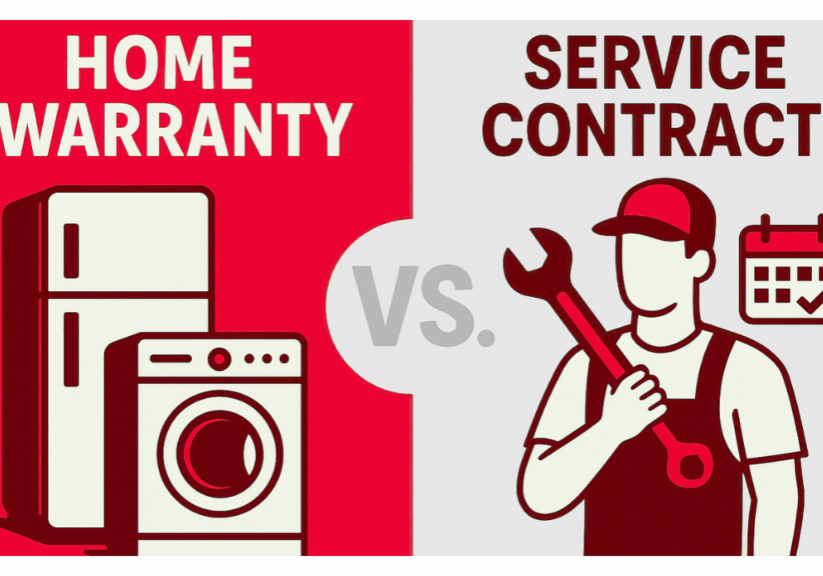
Home Warranty vs Service Contract
Imagine coming home to a humming refrigerator that suddenly goes silent, only to face a $500–$1,000 repair bill for a compressor failure or, worse, the full cost of replacement. According to HomeMembership.com’s appliance repair cost guides, the average breakdown for major kitchen appliances, such as refrigerators or washers, can exceed $400, with HVAC system failures often costing thousands due to normal wear and tear. These unexpected expenses catch many homeowners off guard, turning minor inconveniences into financial headaches, making the Home Warranty vs Service Contract decision more than just semantics.
According to a Forbes Home survey, 85% of homeowners believe home warranties are worth the cost for their comprehensive repair protection, compared to service contracts, which appeal more to the 15% prioritizing lower upfront expenses for limited, targeted coverage.
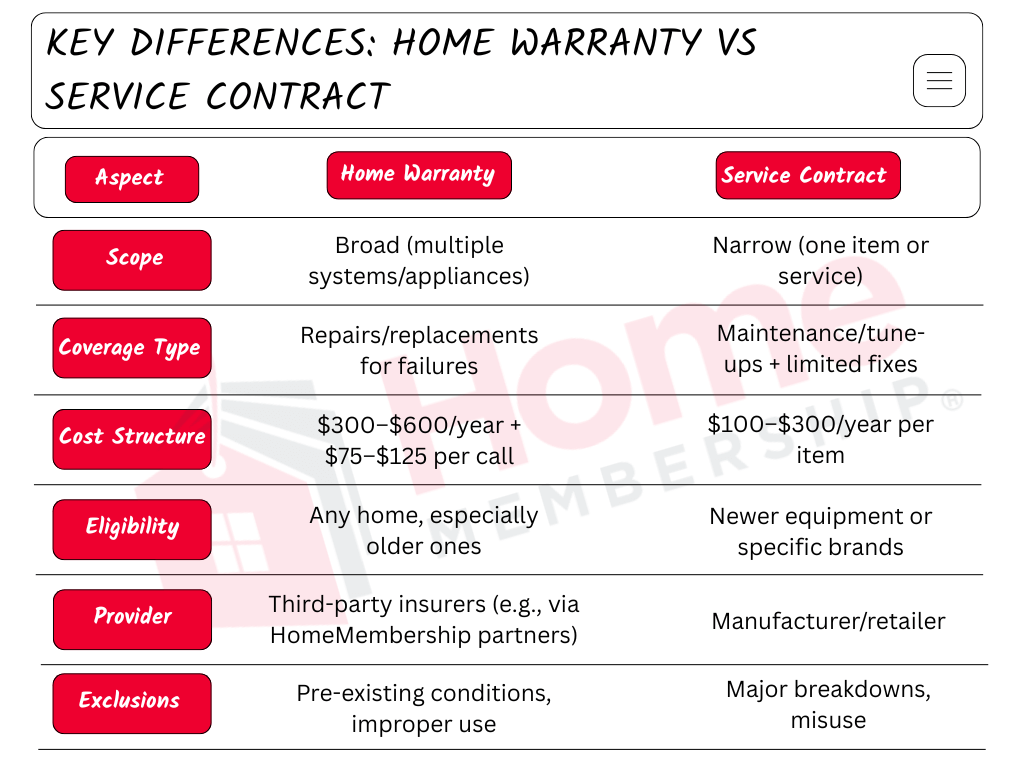
A home warranty is a comprehensive protection plan that acts like insurance for your home’s essential systems (such as plumbing, electrical, and heating) and built-in appliances (like ovens and dishwashers). It covers repairs or replacements when they break down from everyday use, typically after an annual premium and a per-service fee. In contrast, a service contract is often called a maintenance agreement. This is a more targeted deal, usually from manufacturers or retailers, focusing on routine tune-ups, inspections, or limited repairs for a specific item, like an air conditioner or water heater, without the broad scope of a full warranty.
While both options deliver peace of mind against repair disruptions, home warranties shine with broader coverage for multiple major systems and appliances, making them ideal for shielding against widespread failures. Service contracts, however, are more limited in scope but often cheaper upfront, suiting targeted needs like preventive care on newer equipment. Your best choice in the Home Warranty vs Service Contract comparison hinges on factors like your home’s age, repair history, and budget.
This article draws on HomeMembership.com’s expert recommendations to help you evaluate and select the right plan, empowering you to avoid costly surprises and protect your investment with informed decisions.
What is a Home Warranty
A home warranty is an insurance-like policy designed to cover repairs or replacements for your home’s major systems, such as HVAC, plumbing, and electrical. And key appliances like refrigerators, washers, and dryers. As outlined in HomeMembership.com’s “Home Warranty Basics” section, it provides multi-year protection tailored for older homes prone to breakdowns from normal wear and tear, while excluding pre-existing conditions or improper maintenance.
Coverage typically kicks in for failures due to everyday use, helping you avoid hefty out-of-pocket costs. It works simply: Pay an annual premium (often $300–$600), plus a service call fee (deductible, usually $75–$125) per claim. When an issue arises, you contact the provider, who dispatches a network contractor to diagnose and fix or replace the problem, streamlining the process for quick resolution.

What is a Service Contract?
A service contract is an agreement with a manufacturer, retailer, or specialized provider for routine maintenance, tune-ups, or limited repairs on specific items, such as AC servicing or an extended warranty for a refrigerator. As echoed in HomeMembership.com’s “Service Plan Guide,” it’s ideal for newer appliances where preventive care keeps things running smoothly, but it lacks the comprehensive breadth of full home warranties.
Coverage focuses on proactive measures like scheduled inspections or one-time fixes for minor issues, typically tied to a single product or system rather than your entire home. It works via a flat fee or annual subscription (often $100–$300 per item), covering planned visits; when a covered service is needed, claims are handled directly with the contractor, bypassing broader insurance networks for simpler, targeted support.
Key Differences: Home Warranty vs Service Contract
Pros and Cons of Each
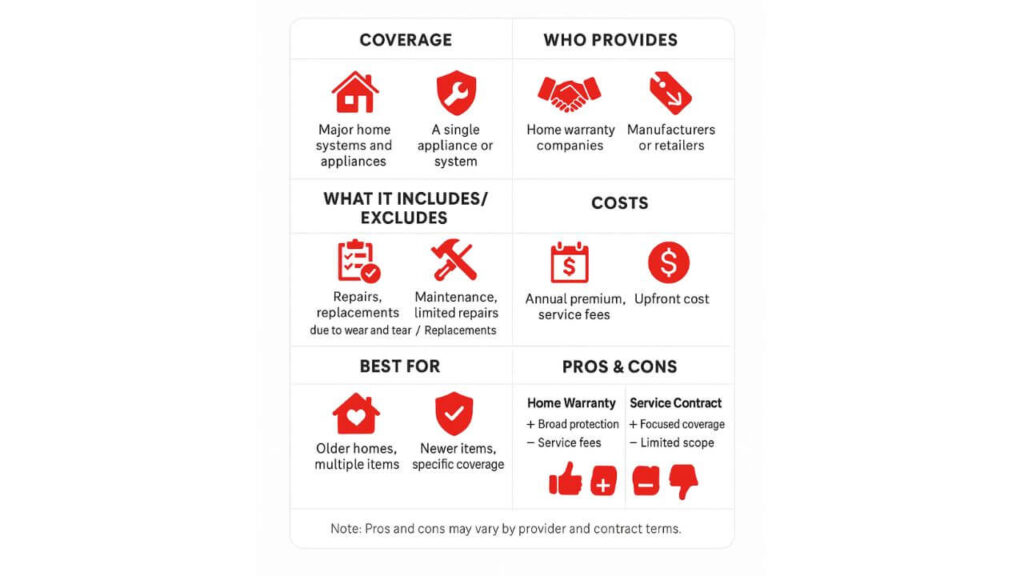
When deciding between a home warranty and a service contract, weighing the advantages and drawbacks is crucial. HomeMembership.com’s resources, including claim success stories and service plan guides, highlight how each option fits different homeowner needs, emphasizing real-world outcomes like faster repairs versus cost savings on specifics. Below, we break down the pros and cons for a balanced view.
Home Warranty
Home warranties offer robust, all-in-one protection that’s particularly valuable for homes with aging systems, as noted in HomeMembership’s claim success stories where users avoided thousands in out-of-pocket expenses.
Pros:
- Comprehensive Protection: Covers a wide array of major home systems (e.g., HVAC, plumbing, electrical) and appliances (e.g., refrigerators, washers), shielding against multiple breakdowns in one policy, this is ideal for preventing cascading failures in older properties.
- Fast Claims Processing: Providers dispatch pre-vetted contractors quickly, often within 24–48 hours, minimizing downtime and hassle, as evidenced by HomeMembership’s testimonials of resolved issues like sudden AC failures during peak summer.
- Budget Predictability: With a fixed annual premium and per-claim service fee, you gain peace of mind knowing repair costs won’t spiral unexpectedly, helping with long-term financial planning.
Cons:
- Higher Premiums: Annual costs typically range from $300–$600 (plus add-ons), which can feel steep compared to targeted plans, especially if your home rarely needs repairs.
- Potential Denials for “Not Covered” Issues: Coverage excludes pre-existing conditions, misuse, or certain failures (e.g., rust from neglect), leading to denied claims if the provider deems it outside normal wear and tear—HomeMembership advises thorough pre-purchase inspections to mitigate this.
Service Contract
Service contracts excel in niche scenarios, like maintaining a high-end new appliance, but their limited scope means they’re not a full substitute for broader protection, per HomeMembership’s Service Plan Guide.
Pros:
- Lower Upfront Cost: Often priced at $100–$300 per year or item, these are more affordable for focusing on one system or product, making them accessible for budget-conscious owners with newer homes.
- Specialized Expertise: Contracts come from manufacturers or dedicated technicians familiar with specific brands or models (e.g., a Carrier AC tune-up), ensuring precise, high-quality service tailored to that equipment’s needs.
Cons:
- Gaps in Coverage for Interconnected Issues: They target single items, so if a fridge failure affects your kitchen’s electrical system, you’re left covering unrelated repairs. HomeMembership notes this as a key limitation for whole-home reliability.
- Less Flexibility: Tied to scheduled maintenance or limited fixes, these plans offer little room for unexpected, major breakdowns or multi-system problems, potentially requiring separate policies and increasing overall complexity.
When to Choose Which?
Selecting between a home warranty and a service contract boils down to your home’s specific risks, usage patterns, and financial priorities. HomeMembership.com’s guides stress aligning your choice with real-life scenarios to maximize value. Whether you’re safeguarding an aging property or maintaining cutting-edge equipment. Below, we explore ideal situations for each, plus key factors to evaluate.
Scenarios for a Home Warranty
Home warranties are a go-to for comprehensive defense against the unpredictable failures that plague established homes. They’re especially recommended when breakdowns could cascade into major expenses.
- Older Homes (10+ Years): If your property dates back a decade or more, systems like HVAC, plumbing, and wiring are prone to wear-and-tear failures. A home warranty covers these multi-point vulnerabilities, preventing a single issue (e.g., a faulty electrical panel) from snowballing.
- Frequent Breakdowns: Homes with a history of repairs- think recurring appliance glitches or seasonal HVAC strains. Benefit from the policy’s broad scope, which handles multiple claims without per-item pricing.
- First-Time Buyers: New owners often inherit hidden issues; HomeMembership tips pairing a warranty with a professional home inspection to identify risks upfront, ensuring coverage starts strong and avoids pre-existing condition denials.
In these cases, the warranty’s all-in-one approach saves time and money, as highlighted in HomeMembership’s buyer resources.
Scenarios for a Service Contract
Service contracts shine in targeted, low-risk environments where you need precision without overpaying for unused coverage. They’re not about whole-home armor but fine-tuned upkeep.
- New Builds or Recently Renovated Homes: Fresh installations from reputable brands rarely fail catastrophically early on, so a contract for routine tune-ups (e.g., annual AC checks) keeps warranties intact while catching minor wear.
- Single High-Value Appliance: For premium items like a Sub-Zero fridge or smart thermostat, a manufacturer-backed contract provides specialized repairs at a fraction of full replacement costs, without bundling irrelevant systems.
- As a Warranty Supplement: Use it to extend coverage on gaps in a home warranty, such as brand-specific parts or enhanced maintenance, creating a hybrid strategy for cost efficiency.
HomeMembership’s Service Plan Guide positions these as smart add-ons for modern setups, where broad policies might be overkill.

Factors to Consider
No one-size-fits-all, so evaluate these elements to decide:
- Home Age: Older structures demand warranties for systemic risks; newer ones favor contracts to avoid premium bloat.
- Location and Climate: Harsh regions (e.g., extreme heat in the Southwest or freezing winters in the Northeast) accelerate breakdowns, per HomeMembership’s regional guides. Option for warranties in high-stress areas to cover climate-induced failures like roof leaks or pipe bursts.
- Total Cost of Ownership: Tally premiums, fees, and potential out-of-pockets. Warranties offer predictability for high-risk homes (e.g., $500/year vs. $2,000 repairs), while contracts minimize expenses for low-maintenance setups but could lead to fragmented costs if issues interconnect.
HomeMembership advises running a quick home audit. List your systems’ ages and past repairs, to crunch numbers and simulate scenarios, ensuring your choice aligns with long-term savings and reliability.
How to Select the Right Plan
Choosing the right home warranty or service contract can safeguard your budget and sanity, but it requires a methodical approach to avoid mismatched coverage. HomeMembership.com’s provider directory and evaluation tools simplify this by offering vetted options and side-by-side comparisons, helping you navigate the market with confidence. Follow these steps and tips to make an informed decision tailored to your needs.
Steps to Follow
- Assess Your Home’s Needs: Start with a self-audit—inventory your major systems (HVAC, plumbing) and appliances, noting their age, condition, and repair history. For older homes, prioritize broad warranties; for specifics like a new AC, lean toward service contracts. HomeMembership recommends using their online checklists to identify high-risk items and estimate potential claim frequency.
- Read the Fine Print: Scrutinize policy details, including what’s covered (e.g., normal wear vs. exclusions like floods), service fees, and claim limits. Understand denial triggers, such as pre-existing issues, to set realistic expectations—HomeMembership’s guides warn that vague language can lead to surprises.
- Compare Quotes: Gather multiple bids from reputable providers using HomeMembership’s provider directory, which features rated plans and user reviews. Factor in annual costs, deductibles, and add-ons; tools on the site allow filtering by coverage type, location, and price to spotlight the best value.
Tips from HomeMembership
- Seek A-Rated Providers: Opt for companies with top ratings from agencies like A.M. Best or BBB for reliability and claim payout reliability—HomeMembership curates these to ensure fast, trustworthy service.
- No-Home Inspection Options: Many plans skip mandatory inspections, speeding up enrollment; this is ideal for first-time buyers, though pairing with a voluntary check (as suggested by the site) minimizes denial risks.
- Valuable Add-Ons: Customize with extras like roof leak coverage, pool/spa protection, or septic systems, especially in vulnerable areas- these fill gaps in standard plans without overhauling your policy.
Common Pitfalls to Avoid
- Overlooking Payout Caps: Policies often limit reimbursements per item (e.g., $1,500 max for an AC unit) or annually, potentially leaving you short on big-ticket repairs- always verify these ceilings against your equipment’s value.
- Ignoring Waiting Periods: New policies may impose 30-day delays before coverage activates, catching owners off-guard during urgent needs; HomeMembership advises confirming activation timelines upfront.
- Neglecting Regional Factors: Standard plans might not address local issues like earthquake-prone wiring. Review for climate-specific riders to prevent uncovered claims.
By leveraging HomeMembership.com’s resources, such as their quote comparison engine and expert reviews, you’ll sidestep these traps and land a plan that truly protects your home investment. Start today with a free consultation through their directory for personalized guidance.
Conclusion
In the debate of Home Warranty vs Service Contract, home warranties deliver all-around security for comprehensive protection against major system and appliance failures, while service contracts offer targeted efficiency for specific maintenance needs at a lower cost.
Take action now: Visit HomeMembership.com’s free quote tool or warranty finder to explore personalized options tailored to your home.
Proactive planning prevents costly surprises, so start with a self-audit of your home systems today to secure peace of mind.
Related Posts