Can you Buy a Home Warranty After Closing?

Buying a home is stressful enough without trying to decide every protection option at the closing table. Many homeowners skip the home warranty at closing or figure they will “come back to it later.”
The good news: in most cases, you can buy a home warranty after closing. You do not have to make that decision on the spot with the title company or real estate agent.
This guide walks through how post-closing home warranties work, when it makes sense to add one, what it costs, and how options like HomeMembership compare with traditional providers.
Can you still buy a home warranty after closing?
Yes. Most home warranty companies allow you to start coverage any time after closing, whether you have been in the home for a week, a year, or longer.
Recent industry analysis suggests that only about 6 million of roughly 86 million U.S. homeowner households, around 7% have an active home warranty, which means most people either never bought one at closing or added coverage later.
What changes is how the warranty works:
- You may have a waiting period (often around 30 days) before you can file a claim.
- Pre-existing problems may not be covered if they existed before your contract started.
- Some providers may require extra questions, photos, or inspections for older homes or systems.
You are not “locked out” just because you said no at the closing table.
Key takeaways in 30 seconds
- You can buy a home warranty after closing, even years later.
- Coverage usually applies to systems and appliances that were in working order when you bought the plan.
- Many traditional companies apply a waiting period before claims are eligible.
- A post-closing warranty can help stabilize your repair budget once you know the house better.
- The right fit depends on your home’s age, condition, and how much risk you are comfortable keeping yourself.
How a home warranty works when you buy after closing

Quick refresher of what is a home warranty
A home warranty is a service contract. You pay a monthly or annual fee, and in return the company helps pay to repair or replace covered systems and appliances when they fail due to normal wear and tear.
It is not the same as homeowners insurance:
- Homeowners insurance covers damage from events like fire, hail, wind, or theft.
- A home warranty helps with mechanical failures, such as a broken furnace, leaking water heater, or failed dishwasher motor.
If you want a deeper primer, this article pairs well with your main “What is a home warranty” guide on HomeMembership.
What a post-closing home warranty typically covers
When you buy a warranty after closing, the coverage menu usually looks the same as if you had bought it at closing. Plans are typically grouped into:
- Home systems
- Heating and cooling (HVAC)
- Electrical systems and panels
- Interior plumbing lines and some plumbing fixtures
- Water heaters
- Sometimes ductwork and sump pumps
- Home appliances
- Refrigerator
- Range / oven / cooktop
- Built-in microwave
- Dishwasher
- Washer and dryer
- Sometimes garage door openers and other built-ins
Exact coverage depends on the plan and provider. Some companies bundle everything, others split systems and appliances, and many offer add-ons (pool, spa, well pump, extra fridge, etc.).
Waiting periods and pre-existing conditions
When you buy after closing, most traditional home warranty companies use a waiting period before you can file a claim. That waiting period gives them a buffer against “sign-up after it breaks” behavior.
Also pay attention to how the contract defines pre-existing conditions. In many cases:
- Failures that began before the start date are not covered.
- Problems noted on inspection reports or visible at move-in may be excluded or require proof of repair.
This is where reading the contract matters. Do not rely only on a marketing brochure or verbal explanation.
How claims and service fees work after closing
The claim process is usually the same whether you bought the warranty at closing or after closing:
- A covered system or appliance fails.
- You file a claim online or by phone.
- The company assigns a contractor or authorizes you to call one, depending on the provider’s rules.
- You pay a service call fee (sometimes called a deductible) to the technician.
- The warranty company pays the rest of the covered repair or replacement amount, subject to coverage limits and exclusions.
Your main job is to understand the service fee, coverage caps, and whether you can choose your own contractor or must use the company’s network.
When is the best time to buy a home warranty after closing?
You do not have to guess blindly. There are a few natural “decision points” after you move in.

Right after closing (first 30–60 days)
Many homeowners decide to add a warranty shortly after they move in, once the dust settles.
You can:
- Review your home inspection report and note any systems that are older, borderline, or flagged for monitoring.
- Check the age of key items like HVAC, water heater, and major appliances.
- Add coverage before those items start causing surprise expenses.
This approach works well if you were unsure at the closing table or wanted time to research real reviews and plan options.
When builder or manufacturer warranties expire
For newer homes or recently replaced systems, you may already have coverage from:
- A builder’s warranty
- Manufacturer warranties on appliances or HVAC
- Extended appliance store warranties
A home warranty can step in as those protections expire, so you do not go from “fully covered” to “fully exposed” overnight.
When your systems start to age
If you are in a home where major systems are 8 to 15 years old or more, the risk of failure naturally climbs.
Adding a home warranty after closing can make sense when:
- Your HVAC is still working, but nearing the end of its typical life.
- You have multiple aging appliances and want predictable repair costs.
- You do not have large savings earmarked for housing emergencies.
After a “near miss” or first expensive repair
Sometimes homeowners wait until they experience a close call:
- You barely avoided a major breakdown.
- You just paid a big bill for a water heater, furnace, or fridge.
- The technician tells you: “Next thing to go is probably your [X].”
At that point, a home warranty can be part of a budget protection plan so the next failure does not hit as hard.
For sellers planning to list the home
You can also use a home warranty later in your ownership as a selling tool:
- Sellers sometimes provide a warranty for the buyer as part of the listing.
- This can reduce buyer anxiety about older systems.
- It can also reduce post-closing disputes if something breaks shortly after the sale.
Even if you are not there yet, it is helpful to know that a warranty can be used on both sides of a real estate transaction.
Pros and cons of buying a home warranty after closing
Advantages of getting a home warranty later
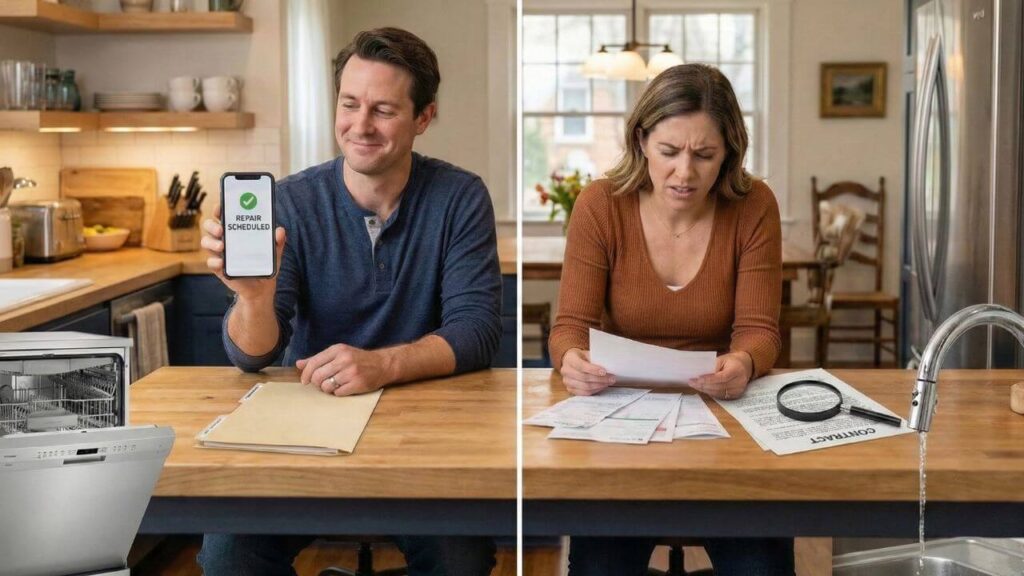
Buying a home warranty after closing has some benefits that people overlook:
- You have had time to live in the home and notice quirks or chronic issues.
- Your inspection report and early repair visits give you a better idea of where the risk really is.
- You can match coverage to actual needs, instead of a generic bundle pushed at closing.
- If your emergency savings are limited, a warranty can help smooth out repair expenses.
Downsides and limitations to consider
On the other hand, there are trade-offs:
- Many traditional providers apply a waiting period, so the policy does not help with immediate issues.
- Pre-existing problems are often excluded, especially if documented on inspections.
- There are coverage caps, exclusions, and “fine print” that may limit how much the company will pay.
- If you go years without a major claim, you might feel like the premium did not “pay off.”
When a home warranty makes sense vs. saving for repairs
A home warranty is often a good fit if:
- Your systems are older and likely to fail.
- You have limited cash on hand for major repairs.
- You prefer predictable costs over large surprise bills.
It may be less compelling if:
- Your home and systems are newer and already covered by other warranties.
- You have robust savings and are comfortable managing contractors yourself.
- You read multiple sample contracts and do not like the coverage caps or exclusions.
Both paths are valid. The best choice depends on your risk tolerance and your financial cushion.
How much does a home warranty cost if you buy after closing?

Typical premiums and service fees
For most providers, the pricing structure is similar whether you buy a plan at closing or later:
- You pay a monthly or annual premium for the plan.
- Each time you request service, you pay a service call fee to the technician.
Premiums and fees vary based on:
- Size and type of home (single-family, condo, etc.).
- Age and number of systems and appliances covered.
- Whether you add specialty items like pools, spas, or well pumps.
Your separate “How much does a home warranty cost” article can provide detailed ranges, examples, and cost math.
Do prices change if you are already living in the home?
Most companies do not charge more just because you are already living in the home. They mainly price based on:
- Coverage level (basic vs. comprehensive).
- Property type and location.
- Optional add-ons.
What can change is eligibility or additional steps:
- Older homes or heavily used systems may require more questions.
- Some providers may limit coverage for very old equipment.
What to look for in a home warranty if you are buying after closing

Match coverage to your actual home and risk
Start with your inspection report, your own observations, and any repair invoices since move-in.
Ask:
- Which systems worry you most: HVAC, electrical, plumbing, water heater?
- Are there appliances that would be painful to replace quickly?
- Are you planning upgrades soon that might make coverage less necessary?
Choose a plan that aligns with real risk, not just a long list of features.
Pay attention to exclusions, caps, and fine print
Before you sign:
- Look at coverage limits per item and per year.
- Compare service fees between providers.
- Read the sections on pre-existing conditions, maintenance requirements, and improper installation.
This is where many customer complaints come from. Clear terms and realistic expectations matter more than fancy marketing language.
Claims process and contractor rules
Different companies handle repairs differently:
- Some assign contractors from their own network.
- Others allow you to choose your own licensed contractor and then submit receipts for reimbursement.
- Response times and availability vary by area.
Think about what matters most to you:
- Do you already have a trusted HVAC or plumbing company you want to keep using?
- Is 24/7 emergency service important?
- Do you prefer direct scheduling with local pros or everything managed through the warranty company?
Company reputation and real customer reviews
Once you have a short list, check:
- Better Business Bureau profiles and complaint patterns.
- Google and third-party review sites.
- State consumer protection or insurance department records, when applicable.
Look for patterns: slow claims, denied coverage, surprise limits, or missing communication. Then compare that to how providers like HomeMembership structure their coverage and support.
Key questions to ask before you sign
A few useful questions:
- Is there a waiting period before coverage starts?
- How are pre-existing conditions handled?
- What are the annual limits per system and per contract?
- What is the service fee per visit?
- Can I choose my own contractor, or must I use your network?
- How do you handle emergency situations, like no heat in winter?
Getting clear answers upfront helps you avoid unpleasant surprises later.
Can you transfer or add a warranty when buying or selling later?

When the seller provides a warranty at closing
Sometimes, the seller or real estate agent includes a home warranty in the purchase:
- The warranty covers the buyer for a set term (often one year) after closing.
- The buyer can usually renew that plan or choose a different provider later.
If you are buying a home with a seller-provided warranty, review:
- What is currently covered and what is not.
- The plan’s renewal pricing and options.
- Whether the coverage limits and service fees fit your expectations.
Taking over an existing plan vs. buying your own
You may be offered the chance to transfer an existing warranty instead of starting fresh.
Pros of transferring:
- You may avoid a new waiting period.
- Some issues identified during the initial term may already be documented and repaired.
Cons:
- You inherit the same coverage caps and exclusions the seller had.
- You may prefer a different company’s claims process or contractor rules.
It is worth comparing the current plan to what you could buy on your own, especially if you want clearer terms or a different style of coverage.
Using a warranty as a selling tool when you list your home
If you plan to sell in the future:
- Offering a home warranty can make buyers more comfortable with older systems.
- It can reduce post-closing tension if something fails soon after move-in.
- It is another way to show that you have taken the home’s maintenance seriously.
In that sense, a warranty you purchase after closing can benefit both you and your future buyer.
How HomeMembership helps homeowners who are already past closing

Traditional home warranty companies were built around real estate transactions. HomeMembership is designed to fit how people actually live in their homes today.
Plans designed for homeowners, not just closing tables
HomeMembership focuses on:
- Clear, transparent coverage charts.
- Simple claims processes.
- Flexible coverage that works whether you bought last week or years ago.
You do not have to be in the middle of a real estate transaction to get protection.
Coverage built around real household needs
Depending on the plan level, HomeMembership can help protect:
- Home systems like HVAC, plumbing, electrical, and water heaters.
- Major appliances that families rely on every day.
- Additional items based on your specific home and risk profile.
The emphasis is on real-world usefulness, not just a long list of line items that never get used.
Contractor flexibility and straightforward reimbursement
Many homeowners already have trusted local contractors. HomeMembership leans into that reality.
Instead of always forcing you into a rigid network, the structure is designed to make it easier to:
- Work with qualified local professionals.
- Submit invoices and documentation.
- Get reimbursed according to your plan’s coverage chart.
This approach can offer more control over who works in your home, while still giving you financial protection.
Who a HomeMembership plan is a good fit for
HomeMembership can be a strong fit if you are:
- A new homeowner who skipped a warranty at closing but now wants budget protection.
- In an older home with aging systems and appliances.
- A busy family that prefers predictable costs over emergency surprises.
- Someone who values clear terms and the ability to work with trusted local contractors.
Is it too late to buy a home warranty after closing?
It is not too late. You can still buy a home warranty after closing and use it as part of a broader strategy to protect your home and your budget.
A post-closing warranty can make sense if:
- Your systems are aging and repairs are more likely.
- You prefer predictable monthly or annual costs.
- You want help managing big, unexpected breakdowns.
If you are considering coverage, take a few minutes to:
- Review your inspection report and any repair invoices.
- List the systems and appliances that would hurt most to replace.
- Compare a traditional home warranty contract with what HomeMembership offers.
When you are ready, you can explore HomeMembership plans and see which option fits your home, your budget, and the stage of ownership you are in.
Related Posts