
Do You Need a Home Warranty on a New Construction

Buying a newly built home feels like the ultimate peace of mind. Everything is fresh, efficient, and under warranty, or so it seems. Many homeowners assume that “brand-new” means “problem-free,” but even new construction homes can face unexpected breakdowns once you move in. HVAC systems can fail from heavy use, dishwashers can stop draining, or electrical components can act up after a few seasons.
According to the U.S. Census Bureau, over 1 million single-family homes were completed in 2024, underscoring the scale of new builds and why considering a home warranty on a new construction is more relevant than ever.
So, do you really need a home warranty on a new construction? The short answer: it depends on your comfort level, budget, and how long you want coverage to last. Let’s break down what your builder covers, where a home warranty adds value, and how the two work together to protect your new investment.
What’s Already Covered: The Builder’s Warranty
Most new construction homes include a builder’s warranty (or are covered by state-implied warranties), but terms vary by builder and state, that is confirmed in your contract. Think of it as your first layer of protection. The builder warranty is designed to cover defects in materials, workmanship, and structural elements that result from the construction process itself.
Here’s how most builder warranties are structured:
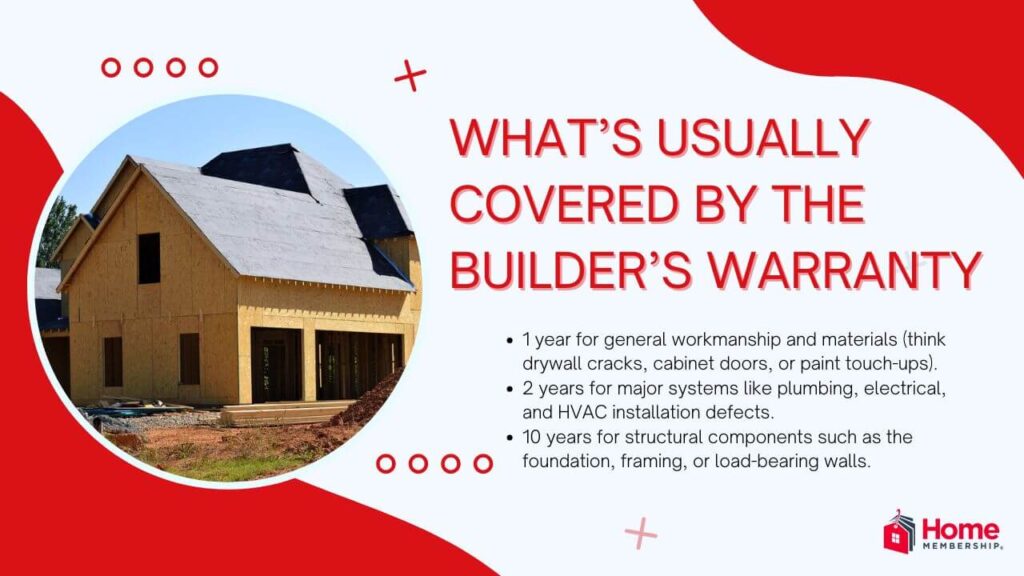
- 1 year for general workmanship and materials (think drywall cracks, cabinet doors, or paint touch-ups).
- 2 years for major systems like plumbing, electrical, and HVAC installation defects.
- 10 years for structural components such as the foundation, framing, or load-bearing walls.
That sounds comprehensive, but there’s a catch: a builder’s warranty doesn’t cover normal wear and tear or appliance breakdowns once you start living in the home. For example, if your HVAC fails because of a faulty part, that’s usually covered; if it stops cooling due to normal use, it’s on you. The same goes for refrigerators, washers, or water heaters; they’re typically excluded.
So while the builder’s warranty protects your home’s construction quality, it won’t help much when daily-use items wear out from regular living. That’s where a home warranty for new construction can make a real difference.
How a Home Warranty Adds Another Layer
A home warranty on a new construction fills the gaps your builder’s warranty leaves behind. Where the builder focuses on construction defects, a home warranty steps in for wear-and-tear breakdowns in the systems and appliances you use every day.
What it actually does for you
- Covers everyday failures after move-in: HVAC, water heater, electrical components, plumbing fixtures, and kitchen/laundry appliances (according to plan).
- Predictable costs: you pay an annual premium and a set service fee per trade call instead of absorbing surprise repair bills.
- Single point of contact: file a claim and the provider dispatches a vetted pro—no chasing multiple contractors.
- Continuity of protection: when the 1–2 year builder coverage on systems winds down, your home warranty can keep coverage going.
Real-world example
- Year 3 in a new build, your AC compressor quits during a heat wave. The builder’s 2-year system window has passed, and the unit didn’t fail from a workmanship defect; it just wore out. With an active new construction home warranty, you file a claim, pay the service fee, and the provider helps cover the repair or replacement up to plan limits.
Key differences from builder coverage
- Cause of failure: builder = defects; home warranty = normal wear and tear.
- Scope: builder = structure/workmanship; home warranty = operational systems + appliances (plan-dependent).
- Duration: builder = tiered (1/2/10 years); home warranty = annual and renewable as long as you want the safety net.
Comparing the Two: Builder vs. Home Warranty
| Feature | Builder’s Warranty | Home Warranty (New Construction Plan) |
| Primary Purpose | Fix defects in materials/workmanship and structural issues | Cover wear-and-tear failures on systems/appliances after move-in |
| Typical Duration | 1 year workmanship • 2 years systems (installation defects) • 10 years structural | 12 months at a time, renewable indefinitely |
| Scope | Structure, workmanship, installation quality | HVAC, plumbing, electrical components, kitchen/laundry appliances (plan-dependent) |
| Cost | Included with the home purchase | Annual premium (often $450–$800) + service fee per trade call |
| Who Handles Claims | Your builder or their subcontractors | The home warranty provider dispatches vetted technicians |
| Cause of Failure Covered | Defects tied to construction | Normal use / wear and tear (not defects) |
| Exclusions | Appliances, normal wear, homeowner-caused damage | Pre-existing conditions, structural items, cosmetic issues (see contract) |
| When It Helps Most | Early move-in period for build issues | Years 1–5+ for everyday breakdowns and budget predictability |
Quick takeaways
- They’re complementary: a builder’s warranty covers how it was built; a home warranty covers how it holds up in everyday use.
- Timing matters: as your 1–2 year builder coverage on systems winds down, a renewable home warranty keeps protection going.
- Budget control: warranties convert surprise repairs into a known premium + service fee—useful right after closing when cash is tight.
When a Home Warranty Makes the Most Sense
A home warranty isn’t just for older homes. It can be a smart safety net for new construction owners, too- especially once the builder’s coverage starts to phase out. Here are the times it makes the most sense to get one:
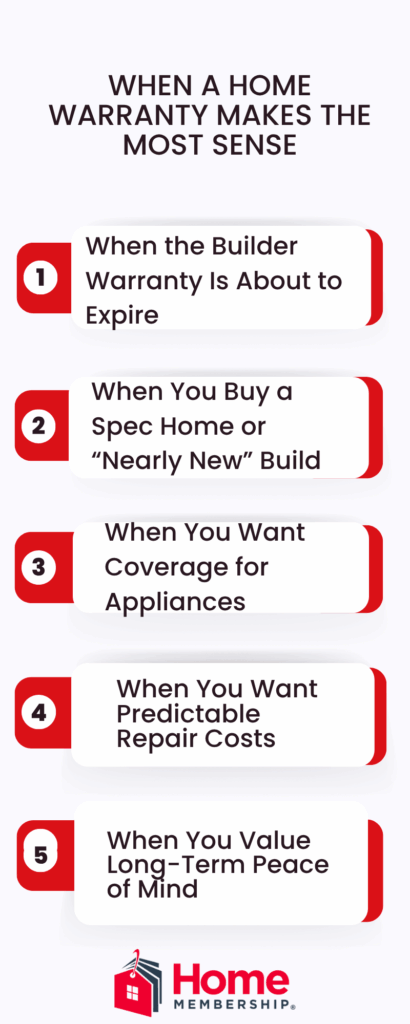
1. When the Builder Warranty Is About to Expire
After your first or second year, builder coverage on systems like HVAC, plumbing, and electrical typically ends. That’s exactly when wear and tear begins. Starting a home warranty on a new construction at that point ensures there’s no gap in protection.
2. When You Buy a Spec Home or “Nearly New” Build
If your home was finished a year or two before you purchased it, the builder’s warranty may already be partially expired. A home warranty fills the gap, especially for systems and appliances that have been running since completion.
3. When You Want Coverage for Appliances
Builder warranties usually exclude your refrigerator, washer, dryer, and oven. A home warranty can step in to cover those essential items when they fail from regular use, not just from defects.
4. When You Want Predictable Repair Costs
After closing, every dollar counts. With a home warranty, you can plan for a single annual premium and set service fee instead of facing a sudden $1,500 appliance replacement.
5. When You Value Long-Term Peace of Mind
Even in a new build, unexpected repairs can happen. A home warranty helps protect your investment through the first few years of ownership, giving you confidence that one breakdown won’t derail your budget.
What’s Typically Covered on New Construction Plans
While specifics vary by provider, new construction home warranty plans usually focus on the systems and appliances you use every day. Coverage applies to wear-and-tear breakdowns (not construction defects) and pays up to plan limits after you file a claim and pay the service fee. Here is in detail what home warranty covers.
Core Systems
- HVAC: condensers, compressors, blower motors, thermostats, air handlers (ductwork may be limited/optional).
- Plumbing: interior supply and drain lines, stoppages, water heaters, toilet mechanisms, shut-off valves.
- Electrical: service panels, breakers, switches, outlets, wiring runs, doorbell chimes, exhaust/ceiling fans.
Appliances
- Kitchen: refrigerator (often incl. ice maker components), range/oven/cooktop, dishwasher, built-in microwave, garbage disposal.
- Laundry: washer and dryer (sometimes as an add-on).
Common Add-Ons
- Roof leak patch coverage (limitations on flashing/penetrations).
- Sewer/septic line enhancements within property boundary.
- Well pump / sump pump, water softener, stand-alone freezer or second fridge.
- Pool/spa equipment (where offered).
Typical Benefit Structure
- Annual premium: often in the ~$450–$800 range for a plan that bundles systems + appliances.
- Service fee per trade call: commonly ~$75–$150.
- Coverage caps: per-item caps often ~$1,000–$3,000; aggregate annual caps may apply.
- Waiting periods: some plans waive or shorten for brand-new installs with documentation.
Good-to-Know Fine Print
- Coverage applies to operational failures from normal use, not builder workmanship or code violations.
- Documentation helps: keep model/serial numbers and install dates from your closing packet.
- Maintenance matters: replace filters, clear drains, and follow manufacturer care to avoid denials.
- Pre-approval: open a claim before work starts; get written approval with scope and cap.
If you prefer to work with your own local professional, review how that process works here: Can you choose your own contractor?
What’s Not Covered with Home warranty on a new construction
Even the best new construction home warranty has limits. Knowing the common exclusions up front helps you avoid surprises at claim time.
Typical Exclusions
- Structural items and workmanship defects
Foundation, framing, roof structure, concrete slabs, and anything that should be handled under the builder’s warranty. - Pre-existing conditions
Issues that existed before your coverage start date or during any waiting period. - Cosmetic or non-functional issues
Paint, grout lines, caulk, trim, scratches/dents, door alignment, “noises,” or minor finish defects. - Code upgrades & access work
Bringing work “to code,” adding access panels, permits, disposal fees, and non-covered modifications (unless your plan explicitly includes them). - Owner-caused damage or neglect
Failures due to improper installation, misuse, lack of maintenance, or DIY wiring/plumbing. - Outside-the-envelope components
Landscaping, irrigation, exterior hose bibs beyond the wall, roof coverings (unless you add a roof-leak option), detached structures (unless specifically listed). - Secondary costs & consequential damage
Damaged drywall, flooring, spoiled food, hotel stays, or lost wages related to a covered failure, unless your plan states otherwise. - Commercial or mixed-use
Units used for commercial purposes or short-term rentals may have limited or excluded coverage.
Edge Cases to Clarify in Your Contract
- Refrigerant & ductwork: limits or caps are common; some plans treat ducting as an add-on.
- High-end or specialty appliances: built-ins, column fridges, smart features, and proprietary parts may have lower caps or exclusions.
- Sewer/Drain lines: Sewer/drain coverage often stops at the home’s exterior walls or at the property line (varies by provider/plan); shared lines or street laterals are typically excluded unless stated.
- Water quality devices: softeners, RO systems, and well/sump pumps are frequently add-ons.
How to Avoid Denials
- Open the claim first: get written pre-approval (scope + coverage cap + service fee) before any work starts.
- Document your equipment: model/serial numbers, install dates, and maintenance logs.
- Do basic maintenance: filters, drain cleaning, and manufacturer-recommended care.

How to Choose a Plan That Fits New Construction
Not every home warranty is designed with new builds in mind. Some are built for resale homes with older systems, so choosing a plan that aligns with your new construction timeline matters.
1. Pick a Provider That Understands New-Build Coverage
Choose a home warranty company familiar with new construction exclusions and documentation. At HomeMembership, our plans are structured to complement your builder’s warranty, covering wear-and-tear once that initial coverage ends. We know how to process proof of installation dates and manufacturer warranties, ensuring smooth transitions after your first year.
2. Look for Coverage on Brand-New Systems and Appliances
Some companies exclude items still under a manufacturer’s warranty or impose waiting periods before coverage starts. Look for a plan that:
- Allows immediate coverage for brand-new systems when you show installation documentation.
Includes appliances that are factory-fresh but could fail due to defects or early wear. - Lets you combine system and appliance coverage in one plan for simplicity.
3. Verify Coverage Caps, Claim Process, and Renewal Flexibility
Before you buy, review:
- Coverage caps: make sure per-item and annual limits match your home’s systems and brands.
- Service process: ensure claims can be filed easily online or by phone, with fast dispatch times for pros in your area.
- Renewal flexibility: choose a plan that can renew automatically or adjust coverage as your home ages.
4. Consider Add-Ons for Long-Term Value
If your home includes extra features like a second fridge, sump pump, or roof coverage option, add them now, it’s usually cheaper than adding later.
That way, you have seamless protection from day one through every season.
Final Thoughts
A Home Warranty on a New Construction extends protection long after your builder’s warranty ends. While the builder covers workmanship and structure, a home warranty takes over when daily use starts causing normal wear and tear on your systems and appliances.
It’s your second layer of protection, keeping repair costs predictable and your home running smoothly once the first-year coverage expires. Instead of worrying about breakdowns, you can count on your plan to help cover repairs and dispatch qualified pros when needed.
For new homeowners, this small annual investment often pays off in peace of mind and budget stability. Explore HomeMembership’s Home Warranty on a New Construction option to keep your home protected through every season ahead.
Ready to protect your new home beyond the builder’s warranty?
A Home Warranty on a New Construction gives you year-round protection for your systems and appliances once the builder’s coverage runs out.
At HomeMembership, we make it easy to choose a plan that fits your home’s needs and budget, whether you’re a first-time homeowner or upgrading to a new build.
Learn how coverage differs in our Guide to Single-Family Home Warranties
Explore options tailored for Townhouse Warranties or Condo Home Warranties
Related Posts