
First-Time Buyer’s Guide to Single-Family Home Warranties

Buying your first single-family home is an exciting milestone, but it comes with a steep learning curve and unexpected financial responsibilities. Among these, repair costs for major systems and appliances can be a significant shock for new homeowners. Single-family home warranties offer a practical solution to manage these costs by covering repairs or replacements for items that fail due to normal wear and tear. Unlike homeowners’ insurance, which addresses sudden events like fires or storms, a home warranty focuses on everyday breakdowns, providing peace of mind for first-time buyers navigating tight budgets and limited repair experience.
In 2024, approximately 1.12 million Americans purchased their first home, representing first-time homebuyers who accounted for 24% of total home sales that year. This figure is particularly notable given that first-time buyers often rely on FHA and VA-insured mortgages, with such financed sales reaching over 500,000 units in recent years, according to Statista data on U.S. house sales trends.
This guide will help you understand what single-family home warranties cover, how they work, their costs, and whether they’re the right fit for your home and financial situation. We’ll also address key considerations, common pitfalls, and practical steps to choose the best plan for your needs.
What First-Time Buyers Should Know
A single-family home warranty is a service contract designed to cover the repair or replacement of major home systems and appliances that break down from normal use. For first-time buyers, this can be a lifeline during the early years of homeownership when unexpected repair costs can strain budgets.
Key Differences from Homeowners Insurance
- Homeowners Insurance: Covers sudden, catastrophic events like fire, theft, or storm damage.
- Home Warranty: Focuses on wear-and-tear failures of systems and appliances, such as a furnace breaking down or a refrigerator stopping cooling.
For single-family homeowners, a warranty provides predictable costs and peace of mind, especially when dealing with older systems or appliances. However, it’s critical to understand the coverage details, service fees, claim processes, and fine print to ensure the plan meets your needs.
How Single-Family Home Warranties Plans Work
A home warranty is a one-year renewable service contract. Here’s how it operates in practice:
Costs
- Annual Premium: Typically $400–$1,200, paid upfront or monthly, depending on coverage and add-ons.
- Service Fee: A flat fee ($75–$150) paid per approved service visit. However, we at Homemembership have a fee of $25-$100.
- Caps: Per-item and aggregate limits cap the provider’s payout. Costs exceeding these are the homeowner’s responsibility.

Timing Considerations
- Waiting Period: Most plans require a 30-day wait before claims can be filed. Starting coverage at closing minimizes gaps. Homemembership has Instant coverage, no waiting period (half limits for the first 30 days).
- Pre-existing Conditions: Issues noted in your home inspection or known before coverage begins are typically excluded. Retain your inspection report and seller disclosures for reference.
Claim Process
- Identify the Issue: Stop any active damage (e.g., shut off water for a leak) and document with photos or video.
- File a Claim: Contact the provider with your plan number, a clear description of the issue, and the model/serial number of the affected item.
- Approval and Dispatch: The provider assigns a network technician or approves your own contractor (with pre-approval).
- Service Visit: Pay the service fee. The technician diagnoses the issue and requests authorization for repairs or replacements.
- Repair or Replacement: The provider covers costs within plan limits. Retain all invoices and communications.
Network Technician vs. Your Own Contractor
- Network Technician: Streamlined process with direct billing to the provider within coverage caps.
- Your Own Contractor: Allowed by some plans with pre-approval. You may pay upfront and seek reimbursement, requiring detailed invoices and documentation.
What’s Covered in a Payout
- Included: Parts and labor for covered failures up to the plan’s caps.
- Excluded: Code upgrades, permits, disposal fees, or cosmetic repairs unless specified.
- Homememebership has coverage up to $33,000+ total; covers 120+ items (HVAC, plumbing, electrical, appliances); excludes pre-existing/known issues, commercial use.
Year-to-Year Realities
- Renewal Pricing: Premiums and service fees may increase based on claims history or market rates.
- Maintenance Requirements: Routine maintenance (e.g., replacing HVAC filters) is mandatory to avoid claim denials.
- Transfers and Cancellations: Plans can often be transferred to a new buyer if you sell. Cancellations are typically pro-rated, minus administrative fees.
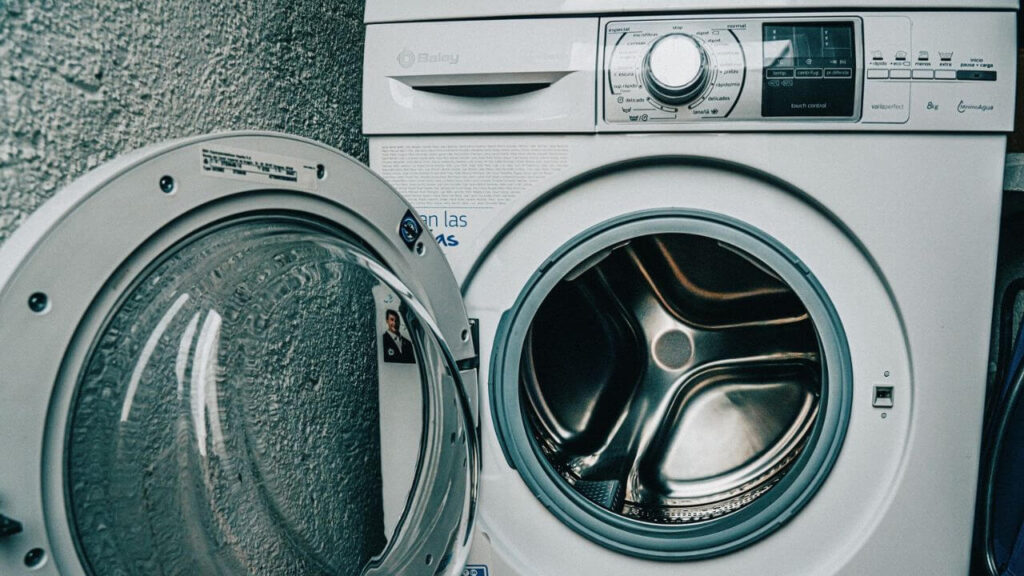
What a “Single-Family” Home Warranty Actually Covers
Big picture: A single-family home warranty is a service contract that helps pay to repair or replace covered items that fail from normal wear and tear. For single-family homes, coverage usually spans the whole house systems and the major appliances inside it.
Core systems (typically included)
- HVAC: furnace, air handler, condenser, heat pump
- Electrical: interior wiring, breaker panels, switches, outlets
- Plumbing: supply lines, drain lines, shutoff valves, water heater
- Ductwork and thermostats
Major appliances (commonly included)
- Refrigerator and built-in ice maker
- Range/oven/cooktop and built-in microwave
- Dishwasher and garbage disposal
- clothes washer and dryer (when listed in the plan)
Popular add-ons for single-family homes
- Second fridge, standalone freezer, wine cooler
- Well pump, septic system components, sump pump
- Pool or spa equipment
- Roof leak patch coverage (where offered)
- Additional HVAC units or water heaters
What’s usually not covered
- Pre-existing or known conditions
- Improper installation or lack of required maintenance
- Cosmetic issues, code upgrades, permits
- Secondary damage from a covered failure (e.g., drywall, flooring)
- Nonessential accessories or smart features not listed in the plan
How coverage limits work
- Per-item caps: a maximum the provider will pay for one system or appliance in a term
- Aggregate caps: a total payout limit across all claims in a term
- Service fee: a fixed amount you pay per approved service visit
Why “single-family” matters
- You own and are responsible for all systems serving the structure, not just the interior.
- Exposure is broader than a condo or townhouse, so add-ons like exterior water/sewer line, well/septic, and roof leak coverage are more relevant.

How to Choose the Right Plan (Step-by-Step)
Selecting the right home warranty is matching coverage to your home’s real risks and your comfort level with surprise costs. Here’s how to make a confident, informed choice.
1. Inventory your home
Start with a simple list of your home’s key systems and appliances, noting the age, brand, and condition of each item.
- Focus on high-cost essentials like HVAC, plumbing, and major kitchen appliances.
- If your inspection report flagged older or “near end-of-life” items, mark them as high priority for coverage.
This quick inventory helps you identify where a breakdown is most likely to happen and where warranty protection would save you the most.
2. Match coverage to risk
Not every home needs the same plan. If your HVAC system is 10+ years old, look for higher coverage caps or optional add-ons that include heating and cooling. If you have a newer home, a more basic plan might make sense until those systems age.
- Older water heater? Check for parts and labor inclusion.
- Historic home? Pay attention to electrical or plumbing exclusions.
Look beyond the headline price, a plan with slightly higher premiums but stronger caps can save you far more over the year.
3. Check the service model
HomeMembership and most reputable providers either:
- Use in-network contractors for faster dispatch and direct billing, or
- Allow choose-your-own technicians with pre-approval and reimbursement.
If you live in a rural area or a smaller town, confirm that network technicians are available locally. Lack of local availability can delay repairs or limit your options.
4. Read complaints the smart way
When researching reviews, skip the single one-star rants and instead look for patterns:
- Delays in scheduling or approval.
- Disputes over coverage caps or pre-existing conditions.
- Positive mentions of fast claim handling or helpful reps.
Realistic expectations come from understanding how the company performs over time, not from isolated stories.
Claim Walkthrough: From Breakdown to Resolution
A smooth claim process minimizes delays and maximizes coverage. Follow these steps:
Confirm reimbursement processing and expected payment date.
Stabilize and Document
- Stop active damage (e.g., shut off water for leaks, power for electrical issues).
- Take photos/videos of the issue, including error codes or visible damage.
- Note model/serial numbers of the affected item.
Open a Claim
Contact the provider via their portal or phone line.
Provide: plan number, property address, model/serial numbers, and a clear description of symptoms (not a diagnosis).
Sample Script: “My plan number is ####. The kitchen refrigerator stopped cooling last night. Model ABC123, serial 456789. No prior issues. Please open a claim and confirm next steps.”
Get Pre-Approval
Request written confirmation of: covered item, suspected failure, service fee, and applicable caps. If you are using your own contractor, get reimbursement instructions and maximum rates.
Dispatch and Diagnosis
- Network Technician: The provider schedules the visit; you pay the service fee.
- Your Contractor: Submit their license, insurance, and itemized estimate for pre-approval.
Authorization
The technician submits the diagnosis; the provider approves repairs or replacements within plan limits.
Confirm: approved scope, covered parts/labor, out-of-pocket costs, and parts ordering timeline.
Repair or Replacement
- Proceed only within the approved scope.
- Request updated approval if new issues arise.
- Save the final paid invoice.
Reimbursement (if applicable)
Submit: itemized invoice, proof of payment, photos of completed work, and pre-approval documentation.
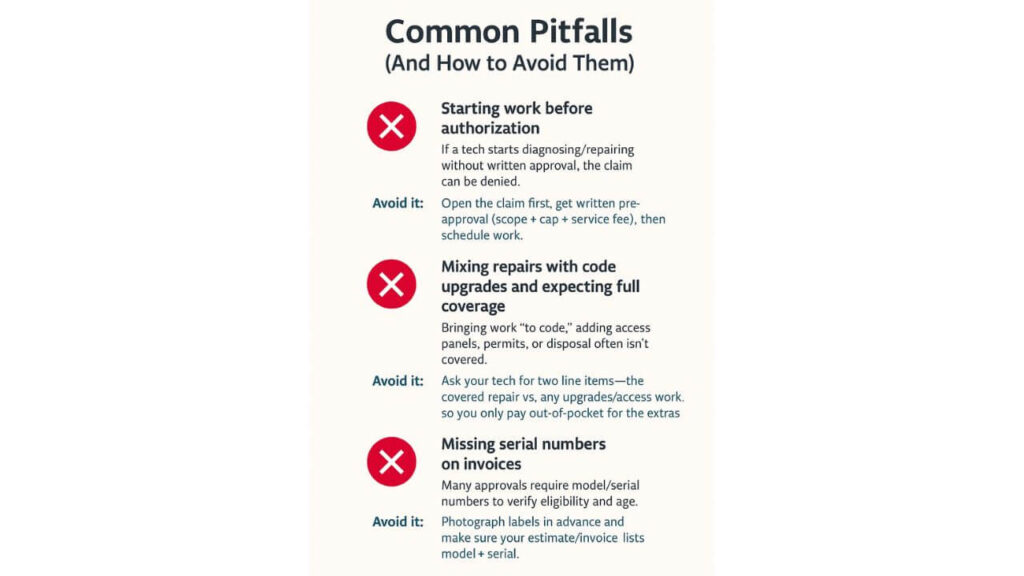
Common Pitfalls And How to Avoid Them
Starting work before authorization
If a tech starts diagnosing/repairing without written approval, the claim can be denied.
Avoid it: open the claim first, get written pre-approval (scope + cap + service fee), then schedule work.
Mixing repairs with code upgrades and expecting full coverage
Bringing work “to code,” adding access panels, permits, or disposal often isn’t covered.
Avoid it: ask your tech for two line items. The covered repair vs. any upgrades/access work, so you only pay out-of-pocket for the extras.
Missing serial numbers on invoices
Many approvals require model/serial numbers to verify eligibility and age.
Avoid it: photograph labels in advance and make sure your estimate/invoice lists model + serial.
Not documenting emergency mitigation (stopping leaks, preventing damage)
Providers expect you to prevent further damage (e.g., shutting off water, protecting floors).
Avoid it: take quick photos/video, shut off valves/power if safe, and note the time you took those steps.
Add-Ons Worth Considering for Single-Family Homes
Exterior water/sewer line
Covers underground line failures from your home to the street. Repairs here get expensive fast.
Good fit: older properties, large yards, trees near lines.
Well/septic
Adds protection for homes off municipal utilities.
Good fit: rural properties; confirm which components (pump, tank, lines) are included and caps.
Roof leak coverage (where offered)
Typically limited, patch-style coverage for active leaks, not full roof replacement.
Good fit: older roofs or climates with heavy rain/snow; check seasonal limits and required maintenance.
Second fridge/standalone freezer; built-ins nuances
Many base plans cover one kitchen fridge only.
Good fit: garage fridges, wine coolers, or built-in units; verify built-in vs. freestanding treatment and cap differences.
The Bottom Line
Single-family home warranties can transform unpredictable repair costs into manageable expenses, offering first-time buyers peace of mind during the early years of homeownership. By covering major systems like HVAC, plumbing, and electrical, as well as appliances like refrigerators and washers, these plans help you avoid budget-breaking surprises. Strategic add-ons, such as exterior line or well/septic coverage, address risks unique to single-family homes.
To make the most of a warranty, inventory your home’s systems, match coverage to your risks, and understand the claim process. By comparing plans carefully and avoiding common pitfalls, you can select a single-family home warranties that fits your home, budget, and comfort level with risk.
Ready to see what fits your home best?
Explore available coverage options and pricing at HomeMembership Plans.
Related Posts