History of Home Warranty
Home warranties may feel like a modern convenience, but the concept has roots stretching back more than 50 years. What began as a simple way to help homeowners protect built-in systems and appliances during a home sale has grown into a multi-billion-dollar industry used by millions of households. And today, with repair costs climbing, aging homes all over the country, and more people seeking predictable monthly budgeting, home warranties are entering a new era of digital-first, on-demand protection.
This guide walks you through the full history of home warranty, from the early consumer-protection laws of the 1970s to today’s growing market and what the next decade is expected to look like.
Early Foundations: Before Home Warranties Existed (1960s–1970s)
Understanding the history of home warranty begins long before they became common. During the 1960s and early 1970s, the United States was undergoing major changes in consumer protection. Millions of Americans were buying new homes and appliances, and product failures were becoming a growing financial stressor for families.
1975: Magnuson–Moss Warranty Act
A major turning point came in 1975, when Congress passed the Magnuson–Moss Warranty Act. While it didn’t create home warranties directly, it shaped how Americans understood warranties by requiring clear disclosures and preventing deceptive practices. This created the legal environment where extended service contracts, including home warranties, could grow.
At this time, the average U.S. household owned fewer appliances than today, but the number was rapidly rising. Also, homes were becoming larger and more complex, which led to higher repair costs.
In other words, the stage was perfectly set for a new type of protection plan.

The Birth of the Home Warranty Industry (1970s–1990s)
To understand the history of home warranty, it’s important to look at how the industry truly began taking shape in the early 1970s. Home warranties emerged as a simple but powerful idea: give homeowners predictable protection for major systems and appliances, especially during the home-buying process.
By the late 1980s, home warranties had become a familiar part of real-estate transactions. If a water heater broke during escrow, the warranty could step in and cover it, and make everyone’s life easier.
1995: NAIC Service Contracts Model Act
Another key moment in the history of home warranty came in 1995, when the National Association of Insurance Commissioners (NAIC) introduced the Service Contracts Model Act (#685). This model provided states with a clear framework for regulating service-contract providers, including:
- Financial backing requirements
- Consumer disclosures
- Cancellation/refund policies
- Clarification that home warranties are not insurance
Since then, most states have adopted their own variations of this model, creating today’s regulatory environment.
How Home Warranty Regulation Works Today
Home warranties are primarily regulated at the state level, and while requirements vary, the structure is similar almost everywhere. Providers usually must:
- Register with a state regulator
- Maintain financial backing (such as insurance backing or reserves)
- Clearly disclose limitations and exclusions
- Follow cancellation and refund rules
- Provide claims procedures and timelines
Homeowners today benefit from stronger protections than in the early days of the industry. However, because each state is different, it’s still important to check your state’s rules—something many homeowners don’t realize until a claim arises.
Homemembership educates homeowners on exactly what to expect and how to use their coverage correctly, which is why our guides and resources are built to simplify the entire process.
Today’s Market: Size, Adoption, and Why Demand Is Rising
The history of home warranty doesn’t stop in the past. Today’s market shows how much the industry has expanded and how quickly homeowner demand continues to grow. The home warranty industry has experienced steady, long-term growth, and although not every homeowner has a plan, the market has become significantly larger and more sophisticated than it once was.
U.S. Market Size
Neutral market research firms estimate the U.S. home warranty market at around:
- ≈ $3.9 billion in 2023
- Growing toward $4.5–$5 billion by 2030
This includes home systems and appliance service contracts purchased through:
- Home sales
- Direct-to-consumer online subscriptions
- Utility partnerships
- Property-management companies
- Digital marketplaces
How Many U.S. Households Use Home Warranties?
According to SEC filings and industry reports:
- Roughly 5 million U.S. homes have a home warranty
- Out of roughly 86 million owner-occupied homes
That means only around 5–6% of homes use a warranty today, and it is a surprisingly small number given rising repair costs. In other words, the market still has enormous room for growth. Here is that on a table:
| Year | Homes with a home warranty | Homes without a home warranty |
| 2018 | 5.0 million | 72.3 million |
| 2019 | 5.0 million | 75.0 million |
| 2020 | 5.0 million | 79.6 million |
| 2021 | 6.0 million | 77.2 million |
| 2022 | 6.0 million | 79.2 million |
| 2023 | 6.0 million | 79.7 million |
Why Homeowners Want Predictability
Recent economic trends have made home warranties more appealing:
- HVAC replacements now often cost $5,000–$12,000+
- Water heaters commonly run $1,500–$3,500
- Federal Reserve surveys show many households lack emergency funds
As a result, many homeowners prefer a fixed annual premium and predictable service fee instead of unpredictable repair bills.
Changing Channels: From Real Estate to Digital Subscriptions
As the history of home warranty has evolved, one of the biggest shifts has been how homeowners purchase coverage. While home warranties originally grew through real-estate transactions, the industry looks very different today.
Direct-to-Consumer Is Now the Majority
Market research shows:
- 50.87% of all home warranty sales in the U.S. now come from direct-to-consumer (DTC) channels.
This shift happened because:
- Homeowners want protection year-round, not just during home purchases.
- Housing inventory and transactions have been historically low.
- Online buying and instant quotes have become the norm.
- Digital platforms make claims easier than ever.
Today’s homeowner prefers convenience, mobile claims, transparent coverage details, and fast service—something modern providers, including Homemembership, focus on heavily.
Why Home Warranties Caught On (The Consumer Side)
Home warranties became popular for a few simple reasons:
Repairs Are Expensive
Prices for parts and skilled labor have increased significantly. According to BLS:
- The cost of appliance repair services has risen steadily year after year.
Homes Are Aging
The median U.S. home is now around 40+ years old. Older homes mean:
- Older wiring
- Older plumbing
- Aging HVAC systems
- More frequent failures
Most Families Don’t Have Repair Savings
Federal Reserve surveys show many households do not have $1,000–$2,000 set aside for emergency repairs.
A home warranty fills that gap.
Peace of Mind Matters
For many people, knowing that one phone call can help solve a breakdown is valuable—even before any claim actually happens.
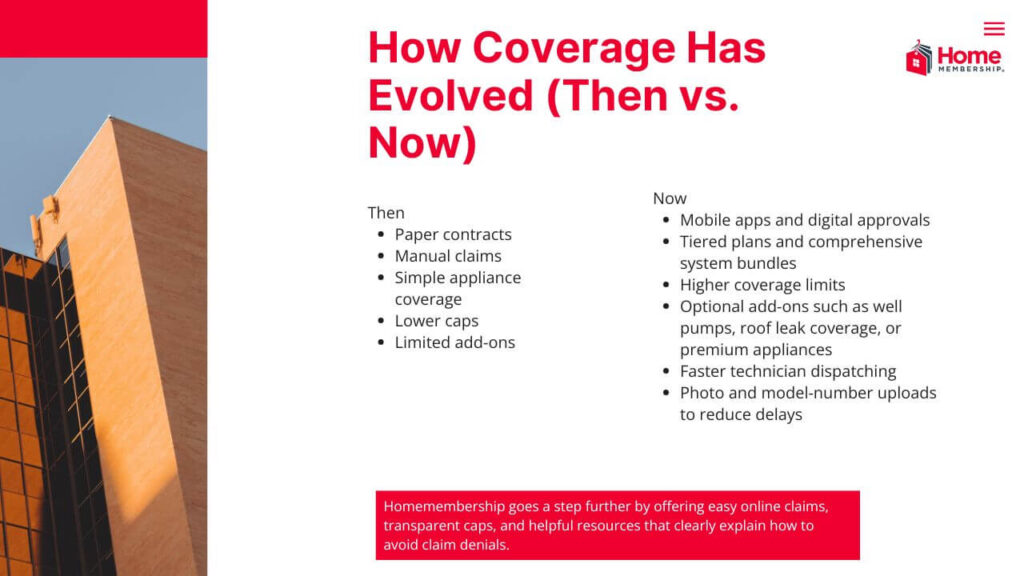
How Coverage Has Evolved (Then vs. Now)
Home warranties have changed dramatically since the early 2000s.
Then
- Paper contracts
- Manual claims
- Simple appliance coverage
- Lower caps
- Limited add-ons
Now
- Mobile apps and digital approvals
- Tiered plans and comprehensive system bundles
- Higher coverage limits
- Optional add-ons such as well pumps, roof leak coverage, or premium appliances
- Faster technician dispatching
- Photo and model-number uploads to reduce delays
Homemembership goes a step further by offering easy online claims, transparent caps, and helpful resources that clearly explain how to avoid claim denials.
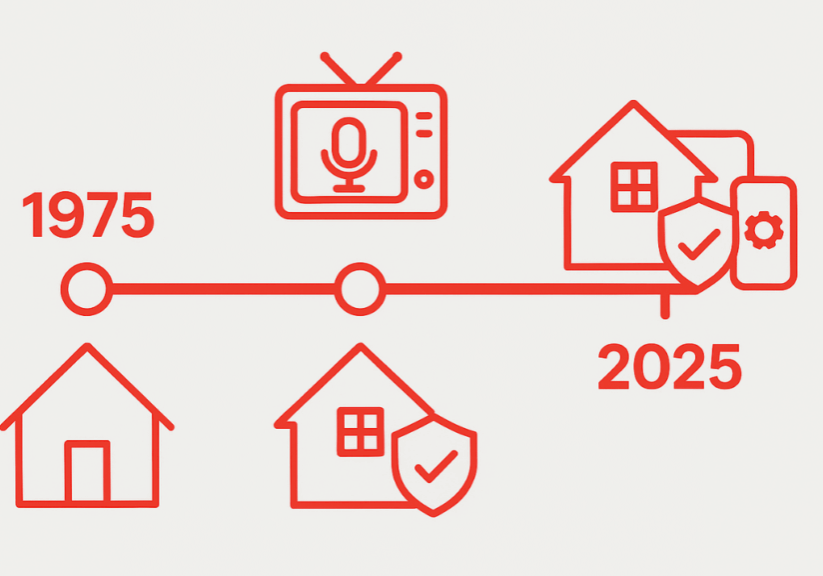
Milestone Timeline
Here is a simple timeline to include in your article layout:
- 1975 — Magnuson–Moss Warranty Act shapes consumer warranty expectations
- 1995 — NAIC adopts Service Contracts Model Act (#685)
- 2000s — Home warranties become a common part of real-estate transactions
- 2010s — Digital claims, wider coverage, and online subscriptions expand
- 2020–2025 — Direct-to-consumer overtakes real-estate channel; industry reaches ~$4B+
The Future of Home Warranties (2025–2035)
As we look ahead, the history of home warranty continues to evolve, shaped by technology, consumer expectations, and changes in the housing market. Based on neutral market-research forecasts:
- The global home-warranty market is expected to grow at ~6–7% CAGR between now and 2032–2035.
- Estimates show the global market reaching $10–14 billion by the mid-2030s.
What Will Drive the Next Decade?
1. Smart-Home Integration
Leak detectors, HVAC sensors, and smart appliances will help predict failures before they happen. Warranties may shift toward “preventive service” rather than only “repair after failure.”
2. Embedded Home Protection
Lenders, utility companies, and home-service apps are beginning to bundle warranty services with their offerings.
3. More Transparent Pricing
As consumers demand clarity, coverage caps and exclusions will become easier to understand.
4. Climate & Weather Considerations
Extreme weather increases the strain on HVAC systems, plumbing, and electrical components. Providers will likely adapt coverage to meet these changes.
5. A More Educated Consumer
Homeowners today compare plans more carefully and look for:
- Reasonable service fees
- Clear coverage
- Reliable claims process
- Use-your-own-contractor options (when allowed)
This is exactly where Homemembership focuses, and that is giving homeowners a simple, fair, and straightforward experience.

What This Means for You as a Homeowner
Understanding the history of home warranty, as well as the future, helps you make better decisions. Here’s what matters most today:
- Know what’s covered and what isn’t
- Understand caps and limits before buying
- Learn how claims work so you can avoid delays
- Compare plans based on your home’s age and systems
- Use your warranty proactively, not reactively
A home warranty isn’t meant to replace an emergency fund, but it can significantly reduce the stress and cost of unexpected breakdowns, especially in older homes or for homeowners with tight budgets.
Ready to Protect Your Home?
Homemembership makes it simple:
- Explore coverage options → Choose some of our plans.
- Learn how claims work → Read the full guide on how Home Membership works
Whether your home is brand new or decades old, understanding the history of home warranty shows why having a plan in place helps you stay prepared, stay protected, and stay ahead of expensive surprises.
Related Posts