New Construction Home Warranty: Why it matters

Buying a brand new home feels like it should mean zero problems for years. Everything is shiny, unused, and often covered by “builder warranties”, so many buyers assume they do not need to think about extra protection for their systems and appliances.
In reality, new construction can still have defects, rushed workmanship, and early failures in major equipment.
A new construction home warranty, meaning a systems and appliances home warranty used on a newly built home, can give you predictable repair costs and an extra layer of protection once the builder steps away.
According to Frontdoor, Inc., approximately one in five new homes built in the U.S. are covered by a 2-10 structural warranty, and the 2-10 business works with about 19,000 builder partners nationwide. As of the end of 2024, Frontdoor reported approximately 2.1 million active home warranty contracts across its brands in the United States.
In this guide, we focus on how a home warranty works for new construction, what it covers, when to start it, and how it fits together with homeowners insurance and any builder or structural warranties you already have.
Here you can learn everything about home warranty.
What is a new construction home warranty?
When we talk about a new construction home warranty here, we are talking about a home warranty plan that covers the systems and appliances in a newly built home, not just the promises your builder makes in the purchase contract.
You might get three layers of protection:
- Builder warranty for workmanship and some early issues
- Structural warranty for the “bones” of the house
- A separate home warranty that you buy, which helps pay to repair or replace systems and appliances when they break from normal use
Builders and structural warranty companies focus on whether something was built correctly. A home warranty focuses on what happens later, when parts wear out, motors fail, or electronics stop working.
You can add this kind of plan at closing or after you move in, and you can usually renew it year after year as the home ages.
If you are still wondering whether you need a home warranty for a new construction, you can read our full guide here to help you decide.
Suggested internal link anchor: how home warranties work
Builder warranty vs structural warranty vs home warranty

It helps to separate the three concepts so you know which one you are relying on:
- Builder warranty
Short term protection for workmanship and materials, such as drywall cracks, sticking doors, loose tiles, or plumbing leaks caused by installation errors.
- Structural warranty
Longer term protection, often up to 10 years, for foundation problems, load bearing walls, framing, and other serious structural defects. Often backed by a third party.
- Home warranty
A service contract you buy separately that helps pay for repairs or replacement when covered systems and appliances break down from normal wear and tear.
Think of builder and structural warranties as protection against “they built it wrong”, while a home warranty protects against “it worked at first, then it wore out”. For new construction, the home warranty is the piece you choose and control.
To learn more about how protection fits together, see our guides on home warranty vs homeowners insurance and what a home warranty covers.
Do you need a home warranty if the home is brand new?
It is easy to assume that a brand new home does not need extra coverage. However, the first few years are when many issues show up and not all of them are fully covered by the builder.
New construction can still include:
- Hidden plumbing or electrical issues that appear only under regular use
- HVAC systems that were not sized or installed as well as they could be
- Early failures of water heaters, dishwashers, or other appliances
Most builder warranties focus on correcting construction defects within a limited time. They often do not cover normal wear and tear, manufacturer failures that appear later, or breakdowns after the short warranty period ends. That is where a separate home warranty can step in, even on a new build.
Wondering how this ties into the closing process? Take a look at our guide on is a home warranty required at closing.
When a new construction home warranty is beneficial
A home warranty on a new build can be especially useful if:
- You are a first time buyer with limited savings for unexpected repairs
- The home has complex systems – multi zone HVAC, smart home features, or high end appliances
- Construction in your area has been very fast paced, with many subcontractors
- You are buying as an investor or will not live in the home full time
When it might be less critical
You might decide a home warranty is less important if:
- The home is very simple with basic systems and appliances
- You have a large emergency fund and are comfortable self insuring
- You prefer to choose and manage every repair on your own
What does a new construction home warranty cover?
A home warranty for a new construction home usually covers the same categories as it would for an older home, but you are using it earlier in the home’s life.
Typical coverage includes:
- HVAC systems – Furnace, air conditioner, heat pump, built in thermostats
- Plumbing – Interior water and drain lines, some valves and joints, sometimes water heaters
- Electrical – Interior wiring, outlets, switches, breaker panels
- Kitchen appliances – Built in dishwasher, range or cooktop, oven, built in microwave, sometimes refrigerator
- Laundry appliances – Washer and dryer, if covered by your particular plan
On a new home, the difference is that some of these items may still be under:
- Manufacturer warranties
- Builder or structural warranties for installation defects
The home warranty becomes most valuable when:
- Manufacturer warranties are short, or
- A problem is not clearly a “defect” but a breakdown from everyday use
Optional or upgraded coverage
Some homeowners also add coverage for:
- Additional appliances (a second fridge, wine cooler, or stand alone freezer)
- Well pumps, sump pumps, water softeners, or septic systems
- Pool or spa equipment, if available in your plan
A plan like HomeMembership can be timed to begin when your builder systems coverage is ending, so you are not left with a gap.
What a new construction home warranty does not cover
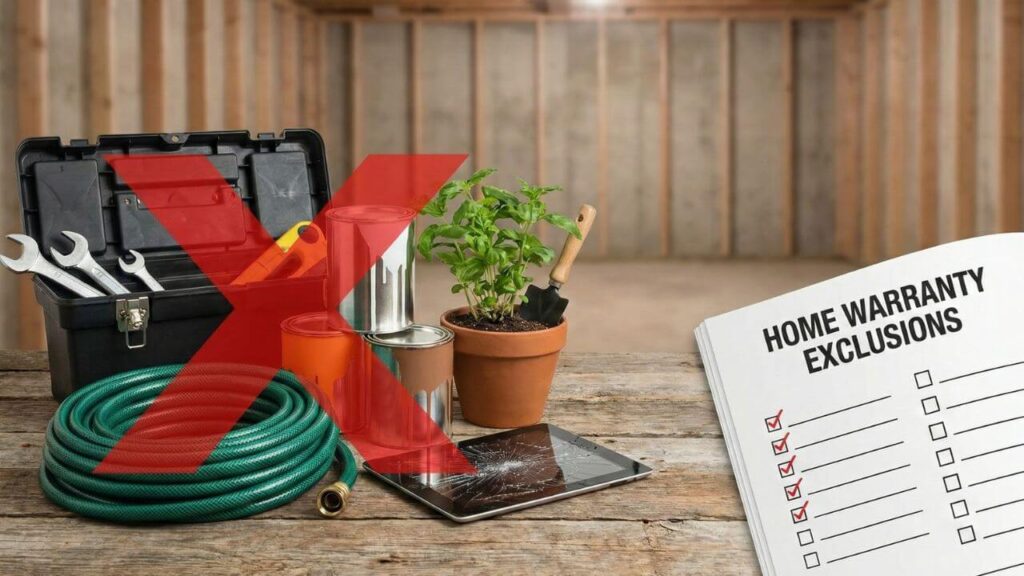
Even a strong home warranty has limits. Common exclusions include:
- Damage from lack of maintenance – for example, never changing HVAC filters
- Misuse, neglect, or unauthorized alteration
- Cosmetic issues such as paint, trim, or minor cracks
- Damage from storms, floods, fire, or other events that fall under homeowners insurance
This is where the three protections work together:
- Homeowners insurance – Sudden, major events such as fire, wind, hail, theft, and some water damage
- Builder and structural warranties – Construction and structural defects within defined periods
- Home warranty – Mechanical breakdowns of covered systems and appliances from everyday use
The goal is not for one product to do everything, but for each to handle its specific job.
How long does a new construction home warranty last?
A home warranty for new construction usually works on a one year contract that you can renew. You choose when to start it.
Common approaches include:
- Starting the plan at closing, so you have coverage from day one
- Waiting until the first year of builder coverage ends, then starting a home warranty
- Waiting until year 2–3, when builder coverage is more limited and systems are a bit older
Once you start, you can typically renew the plan each year as long as the provider continues to offer coverage for your home type and location.
Many homeowners choose to add a home warranty when:
- The one or two year builder warranty expires, or
- The home reaches year 3–5 and major systems are approaching their first significant repairs
If you are planning to wait until after move-in, you can read more in our guide on can you buy a home warranty after closing.
How new construction home warranties are handled at closing

You can add a home warranty for your new build in two main ways:
- Add it to the closing paperwork – The cost can be paid at closing by you, the builder, or sometimes negotiated as part of the purchase agreement.
- Buy it directly after closing – You enroll with a home warranty company using your closing date as the start point or choosing a later start date.
At closing, you should receive:
- Your builder and structural warranty documents
- Your homeowners insurance details
- Any home warranty contract that has been purchased as part of the transaction
Adding a home warranty on top of a builder warranty
Even if your builder offers strong coverage, a separate home warranty can still make sense.
- The builder usually covers construction defects for a short time
- A home warranty focuses on breakdowns from normal use and can be renewed long term
You can time your home warranty purchase in different ways:
- At closing – You get coverage for systems and appliances right away. There may be some overlap with the builder warranty, but you gain predictable service fees and a single point of contact.
- After year 1 or 2 – Let the builder handle early workmanship issues, then add a home warranty when their coverage ends.
- After you upgrade systems – If you install new HVAC, a water softener, or high end appliances, you might add a plan to protect those investments.
Cost and value of new construction home warranties

Builder and structural warranties are usually built into the price of the home, so you may not see a separate charge for them. A home warranty, on the other hand, is usually:
- Charged as an annual or monthly premium
- Paired with a flat service call fee each time you request a repair
To evaluate whether it feels worth it, compare:
- One year of premium plus likely service fees
- The cost of a single out of pocket repair, such as:
- Replacing a furnace or AC
- Repairing a major plumbing leak
- Replacing a failed water heater
If one repair could wipe out your emergency fund, predictable costs through a home warranty can be attractive. If you have strong savings and prefer full control, you may decide to self insure instead.
How to read and compare new construction home warranty contracts
Before relying on any warranty, read the actual contract, not just the brochure.
Key items to look for in a home warranty:
- Coverage limits per item and per year
- Clear lists of what is included and excluded
- Time limits for filing claims and any waiting periods
- Required maintenance and documentation
- Response times and how service calls are handled
Red flags include:
- Very high service fees that make small claims uneconomical
- Many exclusions that remove the most common failures
- Vague language that makes it easy to deny claims
Choosing the right provider matters just as much as choosing the right coverage. Before you sign anything, it helps to compare pricing, service fees, claim rules, and reviews side by side. Our guide on how to choose a home warranty company walks through the key questions to ask and the red flags to avoid.
How HomeMembership fits into new construction protection
A plan like HomeMembership is designed to sit alongside your builder and structural warranties, not replace them.
For new construction owners, that can mean:
- Clear, transparent coverage for systems and appliances once builder coverage ends
- Predictable costs with known service fees instead of open ended repair bills
- Flexibility to time coverage to your home’s age and your budget
Example approaches:
- Peace of mind from day one – Enroll at closing so you have one place to call for covered breakdowns while your home is new.
- Gap protection after year 1–2 – Wait until the builder warranty expires, then start a plan that focuses on system and appliance breakdowns.
Practical tips for using your new construction warranty
To get the most value from your new construction protections, including any home warranty:

Document everything early
- Take photos and videos during move in and as you notice issues
- Keep inspection reports, emails, and repair receipts in one place
Report issues before deadlines
- Note key dates for builder, structural, and home warranty coverage on your calendar
- Submit written requests before coverage periods end, even for small issues
Maintain your home
- Follow recommended maintenance for HVAC, plumbing, roofing, and appliances
- Keep receipts for tune ups and filter changes to show you met maintenance requirements
Conclusion
A brand new home reduces some risks, but it does not eliminate all of them. Builder and structural warranties help protect you from construction defects, yet they are time limited and focused on how the home was built. A separate home warranty adds another layer of protection for the systems and appliances you rely on every day and can be renewed as the home ages.
By understanding what each warranty covers, how long it lasts, and where the gaps are, you can build a protection plan that matches your budget and your comfort with risk – whether that means relying on builder coverage alone or pairing it with a home warranty from a provider like HomeMembership.
Related Posts